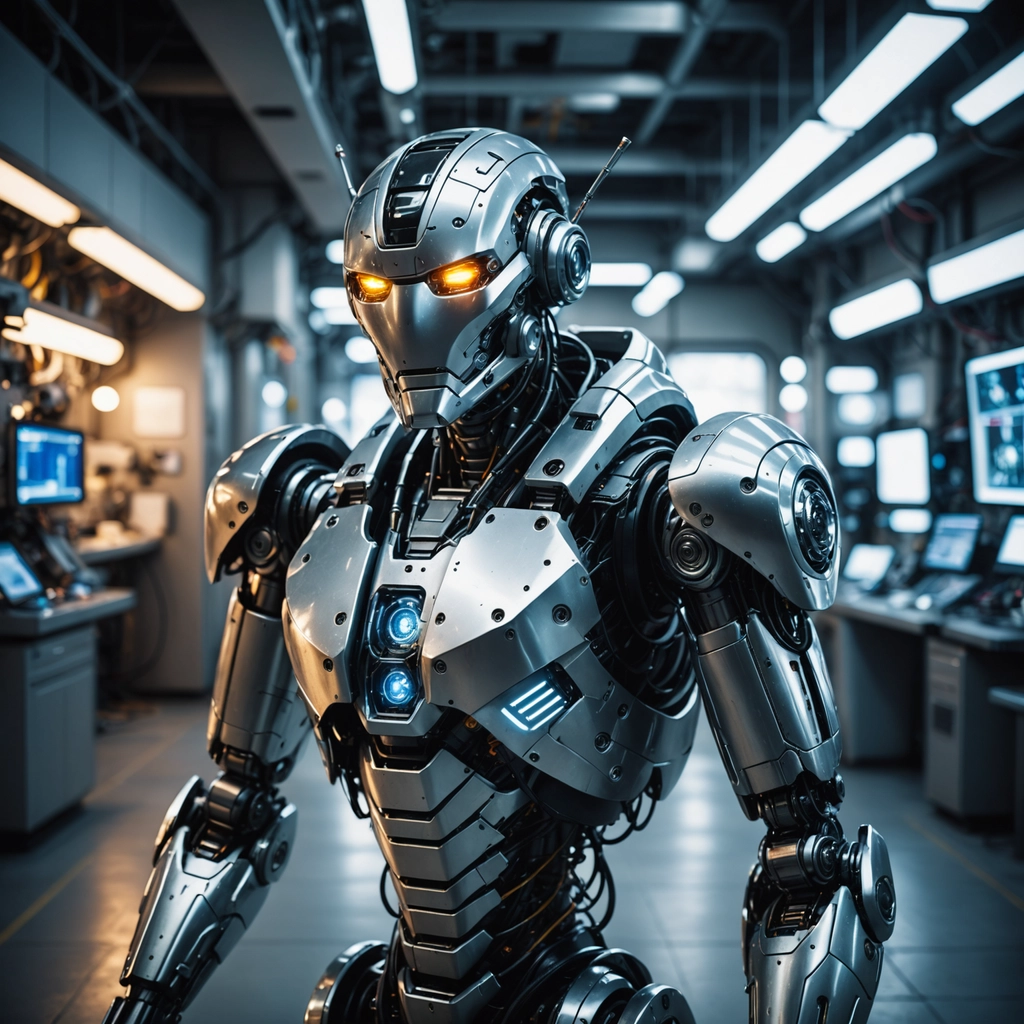
The Global Surge in Humanoid Robotics
Humanoid robots are moving from labs to real-world environments. Major players across Asia, North America, and Europe are accelerating development, with funding in the sector surpassing $3.5 billion globally in 2025. From industrial automation to healthcare assistance, humanoids are quickly becoming part of modern infrastructure – and Canada is emerging as a research leader in embodied AI.
💡 AI Meets Motion: The Rise of Embodied Intelligence
Embodied intelligence – the integration of language, vision, and physical movement – is redefining what it means for machines to “understand.” Modern humanoids no longer just follow code; they interpret intent, recognize emotion, and respond dynamically to their environment. Research at the University of Toronto and McGill is contributing to this fast-evolving field.
🤖 Canada’s Role in the Robotics Revolution
Canada is quietly building a strong robotics ecosystem. From Ottawa’s AI research hubs to Vancouver’s automation startups, innovation in robotics hardware and software is gaining international attention. With increased federal funding for AI and automation research, Canada is positioning itself as a trusted source of ethical and advanced robotics solutions.
📈 Humanoid Robots in the Workplace
The use of humanoid robots in logistics, education, and healthcare is growing rapidly. Service robots are now capable of navigating crowded spaces, carrying objects, and interacting safely with people. As global labor shortages increase, humanoid robotics could play a major role in bridging workforce gaps across industries.
⚙️ Open-Source Robotics: Collaboration Over Competition
A growing number of robotics companies are releasing open-source models, encouraging collaboration rather than secrecy. This approach is accelerating innovation by allowing developers to build on shared frameworks and improve robot intelligence collectively. The movement could define how robotics ecosystems evolve over the next decade.
🌐 The Future of AI Regulation in Robotics
As humanoid robots become more capable, governments worldwide are debating how to regulate them. Topics like AI accountability, ethical robotics, and autonomous safety are moving to the forefront. Canada’s approach – emphasizing transparency, safety, and human-centered AI – may set a model for responsible innovation.
🏭 Robotics and the Future of Manufacturing
AI-driven robots are transforming modern manufacturing. Humanoids and industrial robotics are now being used for assembly, quality control, and even maintenance tasks. Automation is expected to increase Canada’s manufacturing productivity by 25% by 2030, according to industry forecasts.
📡 Robotics in Space Exploration
Space agencies are increasingly integrating humanoid and semi-autonomous robots into missions. These machines can perform maintenance, exploration, and data collection in environments too hazardous for humans. Canadian engineers have contributed to robotic systems that could support future lunar and Mars operations.
💼 Investment Momentum in AI and Robotics
The robotics sector continues to attract investors seeking high-growth opportunities. Global funding for AI and robotics startups reached $18 billion in 2025, with a growing portion focused on humanoid and embodied AI technologies. Canada’s VC community is taking note – fueling domestic innovation hubs from Toronto to Montreal.
🌎 The Human Side of Robotics
Beyond engineering, humanoid robots are inspiring philosophical and social conversations about coexistence. How will society adapt when machines begin working, teaching, or even caring for us? X2Robot aims to highlight both the excitement and responsibility of this technological evolution.